Mahallat
Research on samples from the Mahallat area examines deterioration caused by salt crystallization, among other subjects. This matters when assessing stone for exposed environments. [1]
Colour catches the eye. Structure, cutting direction and origin help you choose. A first guide to the regions and characteristics worth understanding before selecting a block.
This first overview covers selected areas documented in research. A geographical name is a starting point; comparing supplies requires identified samples and batch information.
Research on samples from the Mahallat area examines deterioration caused by salt crystallization, among other subjects. This matters when assessing stone for exposed environments. [1]
Research describes thermal-spring deposits with compact, laminated and iron-rich structures. One area can contain different textures; compare the specific material. [2]
Stones from these origins were studied alongside a Mahallat travertine to assess protective treatments and artificial ageing. They provide two further distinct origins for material research. [3]
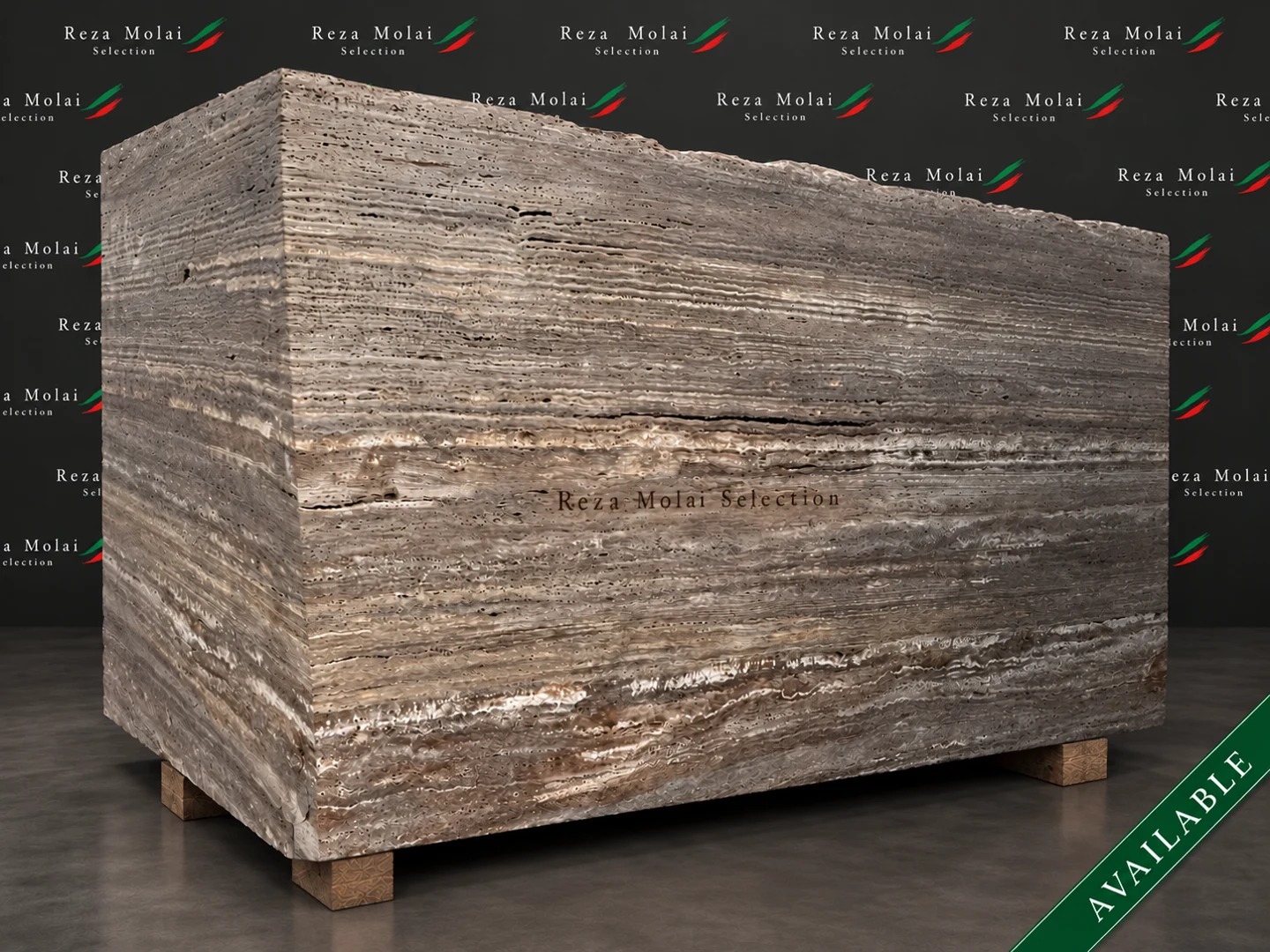
The photographs on this page show Silver Travertine already featured on the site. Its extraction area is not documented here and is not assigned to any of the regions above.
Two views of the same Silver presentation: notice the rhythm of the layers and distribution of voids. Presentation images do not replace a physical sample.
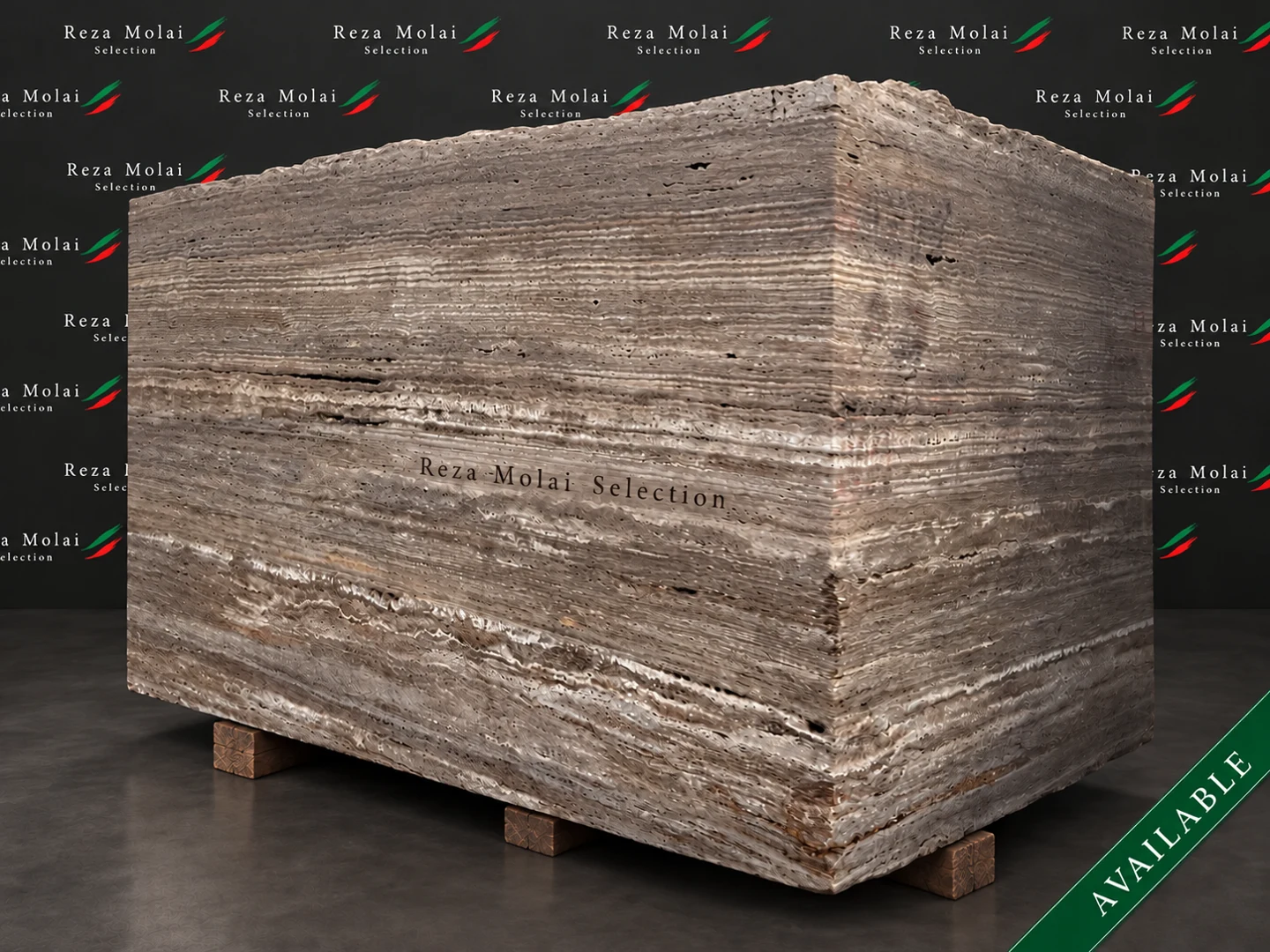
Ask for images of both cutting directions: linear veining and a cloudier appearance may belong to the same material. Agree the desired pattern using a sample.
Examine how voids are distributed, not just how many are visible. When comparing finishes, specify open-pore or filled stone, including the filling product.
Compare photographs under similar light, with dry surfaces and several pieces from the batch. A single image cannot represent the full colour variation.
Sample S7 “Kerem Hajiabad”, Bameri et al., 2025, Table 2. Density, porosity and absorption: ISRM method; compression: ASTM C170, as reported by the study. [4]
Values for the studied sample, not regional averages or certification of blocks for sale. No batch-specific test report is available here for the illustrated Silver.
Flexural strength, freeze–thaw, abrasion and slip resistance: batch data unavailable. Required tests depend on the intended application.
A deposit does not guarantee immediate supply. For each selection, we collect practical information:
We do not yet publish typical quantities or lead times for these regions: current commercial checks are missing. Individual records show the status of materials already in the catalogue.
Records link to the catalogue. “On request” means availability must be confirmed; it does not mean ready for delivery. Colour is never used to infer extraction origin.
No travertine blocks are currently published in this selection.
Open the travertine catalogue ↗